
The German education system, recognized globally for its quality and accessibility, stands as a beacon of free education, providing a myriad of study paths for students. This article serves as a comprehensive guide, unraveling the intricacies of the German school system, from preschool to higher education.
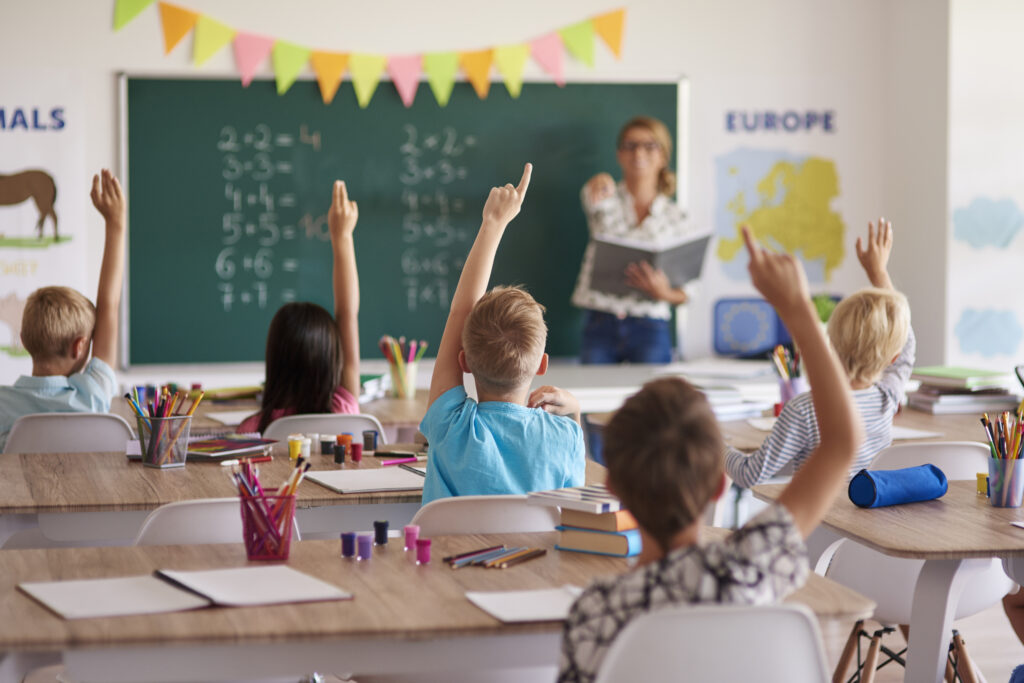
How does the German school system work?
The German school system is intricate and may seem bewildering at first. While private schools have gained popularity, the public school system remains the nucleus of German education. Remarkably, every German state manages its education policies, emphasizing the decentralized nature of the system. Yet, twice a year, ministers of education convene at the national conference (Kultusministerkonferenz) to synchronize practices and plans.
Unlike many countries, there is no regional mandate dictating which school a student must attend. Families have the liberty to choose the school that aligns with their preferences and values.
Compulsory School Attendance in Germany
Compulsory school attendance (Schulpflicht) in Germany mandates that children aged six to fifteen attend school. Rooted in the German constitution (Grundgesetz), this policy aims to provide equal educational opportunities, fostering social diversity and preventing the emergence of parallel societies based on ideology or religion. Consequently, home-schooling is illegal in Germany.
Preschool Education in Germany
Preschool education, though not an integral part of the public school system, is crucial. Options range from traditional Kindergarten for ages three to six, to Kindertagesstätte (Kita), catering to infants as young as six months. However, the scarcity of daycare spots poses a challenge for parents, with some resorting to applying for spots while still pregnant.
Primary School in Germany (Grundschule)
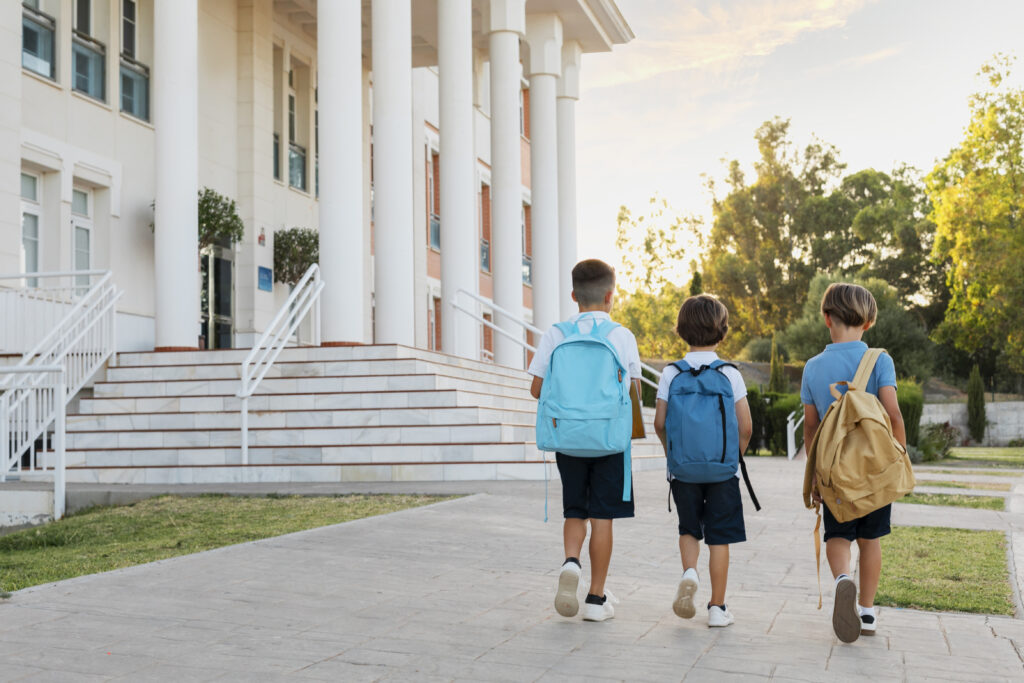
Primary education in Germany commences with Grundschule, spanning grades 1-4 (1-6 in Berlin and Brandenburg). Celebrated as Einschulung, this marks a significant day for six-year-olds, marked by the tradition of receiving a school cone (Schultüte) filled with goodies. Parents choose the primary school, sign up their children, and oversee regular attendance. Subjects encompass reading, writing, basic math, and English. At the end of primary school, teachers recommend a path for secondary education, although the final decision rests with parents.
Secondary School in Germany (Weiterführende Schule)
Secondary education unfolds from fifth grade, varying across states with distinct school systems. The three main types of schools – Hauptschule, Realschule, and Gymnasium – offer diverse educational tracks.
Hauptschule (5th – 9th Grade)
Hauptschule, with 1,818 institutions, caters to students inclined towards vocational training in crafts or industrial trades. After grade 9, students embark on a two to three-year vocational training, combining practical experience and theoretical learning. This dual system, known as Ausbildung, culminates with certification as tradespeople.
Realschule (5th – 10th Grade)
With 1,752 schools, Realschule provides mid-level education, preparing students with practical and theoretical knowledge. Graduates can pursue higher education after completing vocational training or opt for voluntary service, gaining professional experience.
Gymnasium (5th – 12/13th Grade)
Gymnasium, the pinnacle of secondary education, spans 3,146 schools, focusing on university preparation. The curriculum, traditionally 13 years (G9), includes rigorous academic subjects. Despite a brief shift to 12 years (G8), many states reverted to the longer duration, emphasizing an in-depth academic focus. Secondary level II (grades 11-13) serves as preparation for university studies, culminating in the Abitur exam.
Gesamtschule (5th – 13th Grade)
Gesamtschule integrates Hauptschule, Realschule, and Gymnasium under one roof, facilitating track switches. Although introduced in the late 1960s, it hasn’t replaced the traditional three-school system entirely. Full-day classes, available in some Gesamtschulen, enhance the learning experience.
Special Needs Schools in Germany
Förderschule or Sonderschule caters to students with learning disabilities, sparking controversy due to concerns about integration.
International Schools in Germany
Private international schools, teaching in English or bilingual, have gained popularity. Most offer the International Baccalaureate (IB) degree, providing access to both German and international universities.
Private Schools in Germany
While private schools doubled in the last two decades, they remain less prevalent than in other countries. Ranging from elementary to higher education, private schools charge tuition fees and may implement school uniforms. Staggered fees and benefits aim to prevent societal divides, adhering to the German basic law (Grundgesetz).
Boarding Schools in Germany
Internat, comprising over 250 private boarding schools, caters to various interests, including academics, sports, and music. All follow the German curriculum up to the Abitur.
Higher Education in Germany
Germany, known for its tuition-free university education, boasts 422 higher education schools, including universities, Fachhochschule (applied science), art colleges, and more. The number of students pursuing academic degrees surged by 52% from 2002 to 2021. The Bachelor and Master degrees, introduced in 2002, align Germany’s academic curriculum with international standards.
According to the QS-Ranking, 12 German universities are rated among the best 200 universities in the world.
Is Schooling Free in Germany?
Yes, Germany’s public education system, inclusive of universities, is accessible at minimal cost. While there may be nominal fees like the Semesterbeitrag, the bulk of education remains tuition-free.
The German School Year Explained
The German school year consists of two terms, with varying start and end dates across states. A staggered vacation schedule rotates yearly, aiming to alleviate overcrowding and logistical challenges.
Schulferien lists the vacation schedule per state and year
The German School Day Explained
Commencing at 8 am and concluding around 1 pm, a typical German school day involves six 45-minute classes and breaks. Students, assigned to fixed classes with lead teachers, stay together throughout elementary and secondary level I. Specialized subjects may require moving to different classrooms.
Most German schools lack cafeterias, and students typically eat at home. While full-day schools, exemplified by Gesamtschule, are gaining popularity, they remain a minority.